
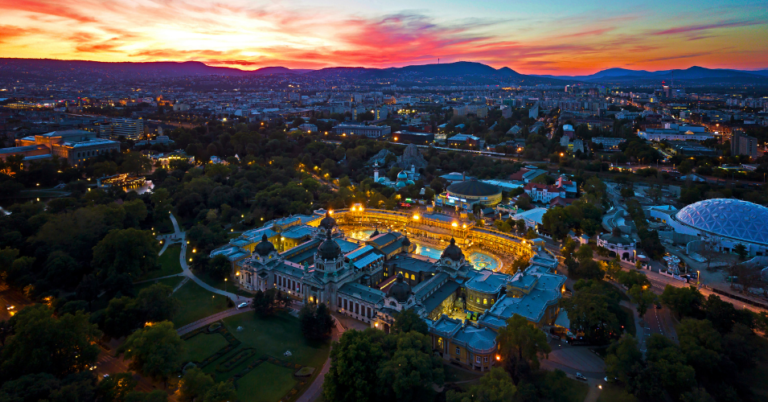
Budapest will soon begin a major transformation of its most famous bathhouse. Construction crews will restore the 110-year-old Széchenyi Thermal Bath in several stages. The first phase focuses on a complete overhaul of the women’s thermal section. This means, that workers will upgrade all mechanical systems while experts carefully restore the historical details. In fact, the biggest challenge involves keeping the bathhouse open to visitors throughout the entire project.
Project Scope and Timeline
Budapest Spas cPlc. recently launched the official tender process to hire a construction team. This step marks a major milestone for one of Europe’s largest bath complexes.
- The initial phase covers 1,422 square meters across the basement, ground floor, and attic areas.
- Construction crews expect the work to take about one full year to complete.
Upgrading Pool Mechanics and Engineering
The first stage targets the women’s thermal pools located in District XIV.
- First, workers will remove old pool coverings, upgrade mechanical networks, and reinforce load-bearing structures.
- Second, electricians will completely replace the building’s wiring to ensure long-term energy efficiency.
- Finally, specialists will install modern water treatment gear and pipe networks to improve overall water quality.
Restoring Historical Features
Preserving historic architecture remains a top priority throughout this project. Therefore, specialized restorers will work carefully to save decorative elements and original character.
- Teams will repair ornate wooden and metal structures across the facilities.
- Experts will restore decorative stone surfaces, fake stone finishes, and detailed plasterwork.
- The goal balances original early 20th-century charm with high-tech 21st-century standards.
Renovating Facilities While Staying Open
Crews will install brand-new furniture, radiators, sauna equipment, and plumbing fixtures. Workers will replace most doors and windows, keeping only key historic pieces as well.
Operating during construction creates unique logistical challenges. Mainly because the historic site holds national heritage status and sits within a World Heritage area. Crews must follow strict heritage laws while running temporary pipes so visitors can continue using the rest of the facility safely. All together, this renovation begins a broad development effort to protect the bath for many decades to come.
Source: https://magazin.otthonterkep.hu/